
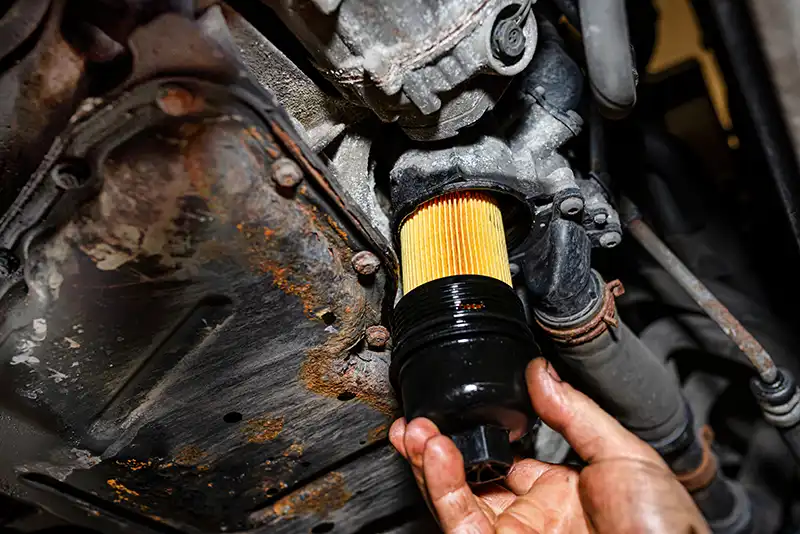
An oil change does more than replace old motor oil with fresh oil, because the oil filter is also part of the engine’s protection system. Replacing both parts together helps keep the new oil from immediately passing through a filter that may already be holding dirt and debris.
Your engine depends on clean oil to lubricate moving parts and manage heat during everyday driving. A neglected oil filter can restrict oil flow or allow contaminants to remain in circulation, which may reduce the value of an otherwise timely oil change.
Keep Fresh Oil From Meeting Old Contaminants
A new oil filter gives fresh motor oil a cleaner path through the engine from the very beginning of the service.
- Old filters can retain used oil and the particles collected during prior driving.
- Reusing the filter may allow trapped debris to mix with newly added oil.
- A replacement filter starts the next service interval with a clean filtering surface.
This simple step helps the entire oil change work as intended instead of leaving part of the old system in place, and it makes the service a more complete reset for the engine’s lubrication system.
Support Steady Oil Flow Through the Engine
Oil must move freely through narrow passages to reach critical engine components when the vehicle is running.
- Filter material gradually collects particles as miles and operating hours add up.
- A heavily loaded filter may make it harder for oil to move efficiently.
- Timely replacement helps maintain consistent flow during cold starts and normal driving.
Good oil flow supports dependable lubrication, especially when the engine is working hard in traffic, hot weather, or stop-and-go conditions. It also gives clean oil a better opportunity to reach important components without unnecessary restriction.
Help Reduce Wear on Internal Parts
Even small particles can become a concern when they circulate repeatedly through tightly fitted engine components.
- A fresh filter captures contaminants before they travel farther through the lubrication system.
- Cleaner oil helps protect surfaces that move against one another inside the engine.
- Replacing the filter regularly supports a cleaner environment for the engine’s moving parts.
While no filter eliminates every risk, regular replacement is a practical way to support long-term engine care.
Match the Filter to the Oil Change Interval
The filter and the oil should be chosen as a pair based on the vehicle’s needs and the planned service schedule.
- Ask for a filter designed for your vehicle’s engine and oil type.
- Follow the maintenance interval listed in the owner’s manual for your driving conditions.
- Consider shorter service intervals if your driving includes heavy traffic, towing, or frequent short trips.
Matching the filter replacement to the oil change avoids asking an older filter to work beyond its expected service life.
Use the Service Visit to Check for Related Issues
An oil change appointment is also a useful opportunity to notice small maintenance concerns before they become larger problems.
- Check the oil level and look for visible signs of leaks under the vehicle.
- Pay attention to dashboard warnings, unusual engine noise, or a burning-oil smell.
- Keep a record of the service date, mileage, oil type, and filter replacement.
Clear records make it easier to stay on schedule and give a technician helpful information if an issue appears later.
Give Your Engine a Cleaner Start After Every Oil Change
Replacing the oil filter during every oil change is a small decision that supports the purpose of the entire service. It helps fresh oil circulate through a clean filtering component rather than one already holding contaminants from previous use.
Regular filter replacement is also an easy habit to build into a broader maintenance routine. When combined with timely oil changes and attention to warning signs, it can help you protect your engine and drive with greater confidence.
