
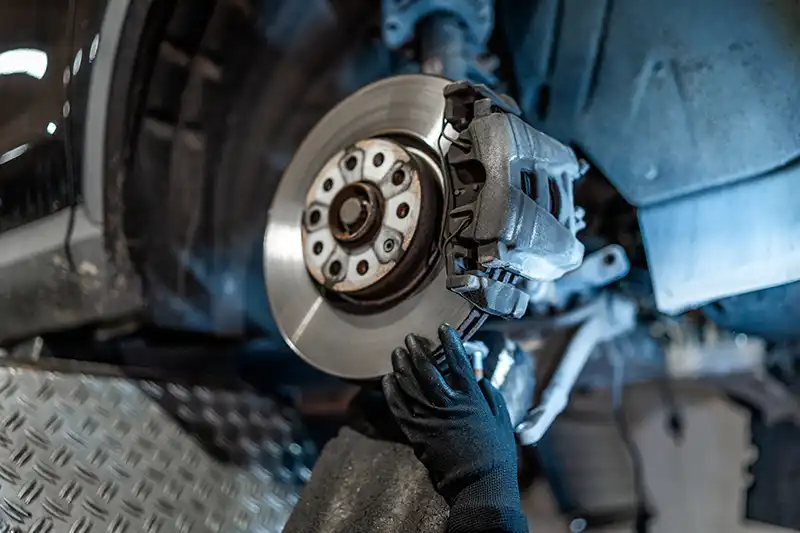
Your brakes are one of the most important safety systems in your vehicle, and they work hard every time you slow down or stop. Regular brake service gives you an opportunity to inspect worn components, address minor issues, and maintain dependable stopping performance.
Waiting until you hear grinding, feel vibration, or see a warning light can allow a smaller concern to become more involved. A consistent brake-care routine helps you respond early, protect related parts, and plan repairs before they become urgent.
Catch Brake Pad Wear Before It Spreads
Brake pads are designed to wear gradually, and inspecting them regularly helps identify when replacement is needed before they wear too far.
- Ask for pad thickness to be checked during routine service visits.
- Listen for squealing or scraping sounds when pressing the brake pedal.
- Schedule an inspection if braking feels different from normal driving conditions.
Replacing worn pads on time can help protect other brake components from damage caused by prolonged metal-to-metal contact. It also lets you schedule service at a convenient time rather than react to an unexpected brake problem.
Protect the Rotors From Unnecessary Damage
Brake rotors provide the surface that brake pads press against, so their condition affects smooth and controlled stopping.
- Have rotors inspected for wear, scoring, heat marks, or uneven surfaces.
- Address pedal pulsation or steering-wheel vibration when braking promptly.
- Avoid delaying pad replacement when the pads are already near the end of their usable life.
Timely attention can sometimes prevent a minor pad issue from contributing to more extensive rotor work. It can also preserve a smoother braking feel and reduce the risk of vibration becoming worse.
Monitor Brake Fluid and Hydraulic Components
Brake fluid and hydraulic parts help transfer force from the pedal to the brakes, which makes routine inspection important.
- Check for signs of leaks around brake lines, hoses, calipers, and wheel areas.
- Request brake-fluid service according to the interval in the owner’s manual.
- Respond quickly if the brake pedal feels soft, spongy, or sinks farther than usual.
A professional inspection can identify hydraulic concerns early, when repairs may be more straightforward and easier to schedule. Addressing them promptly is important because brake response should remain predictable in every driving situation.
Address Noise, Pulling, and Warning Lights Early
Changes in brake behavior are useful signals that should be checked rather than ignored or assumed to be temporary.
- Schedule service if the vehicle pulls to one side while braking.
- Do not ignore grinding, repeated squealing, burning smells, or brake warning lights.
- Explain when the symptom occurs, such as during cold starts, highway braking, or downhill driving.
Detailed observations can help a technician diagnose the issue efficiently and focus on the correct area of the brake system.
Follow a Practical Inspection Schedule
A predictable inspection routine makes brake care easier to manage and reduces the chance of unpleasant surprises.
- Include a brake inspection with oil changes, tire service, or other regular maintenance visits.
- Review the owner’s manual for service guidance suited to your vehicle.
- Request inspections more often if you tow, drive in heavy traffic, or travel in hilly areas.
Consistent checks help you make informed decisions based on the actual condition of your brakes instead of waiting for a serious symptom. This approach can be easier on your budget than responding only after a serious symptom develops.
Protect Your Stopping Power and Your Budget
Regular brake service is a practical investment in both vehicle safety and long-term maintenance costs. By identifying worn pads, rotor issues, fluid concerns, and warning signs early, you have more options to address them before the work becomes more extensive.
Make brake inspections a normal part of caring for your vehicle rather than a service reserved for emergencies. Acting early can support confident stopping, reduce stress on related parts, and help you avoid costly repairs that may result from waiting too long.
