
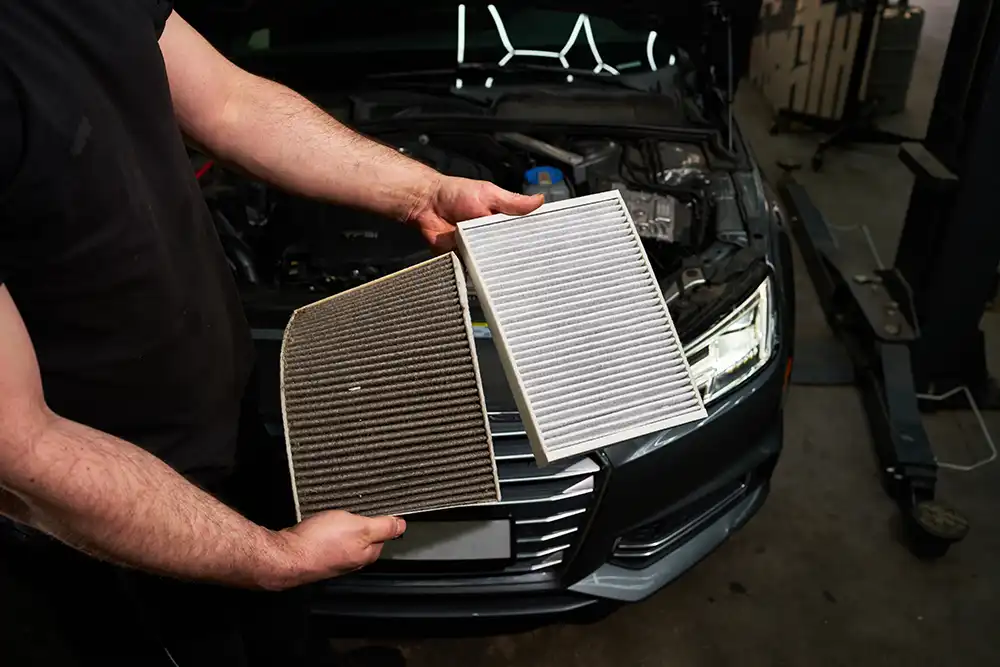
Your vehicle relies on two separate air filters working quietly behind the scenes, and each one serves a completely different purpose. Understanding what these filters do helps you protect both your engine’s performance and the air your family breathes.
Many drivers assume one filter handles everything, which leads to neglected maintenance and avoidable repairs. Once you see how these two filters work as a team, replacing them becomes an easy decision.
Two Filters, Two Very Different Jobs
Your engine air filter and cabin air filter may look similar, but they protect entirely different systems. One keeps your engine breathing clean air, while the other keeps you breathing clean air.
- The engine air filter sits in the engine compartment and cleans the air entering your motor for combustion.
- The cabin air filter, usually located behind the glove box, cleans the air flowing through your heating and air conditioning vents.
- Each filter is designed with specific materials suited to its unique job.
Knowing which filter does what makes it easier to understand why skipping one affects your vehicle differently than skipping the other.
How the Engine Air Filter Protects Performance
Your engine needs a precise mix of air and fuel to run efficiently, and even small amounts of dirt can throw that balance off. A clean engine air filter acts as the first line of defense against dust, debris, and road grime.
- A clogged filter restricts airflow, forcing your engine to work harder and burn more fuel.
- Contaminants that slip past a worn filter can cause internal wear on cylinders and pistons over time.
- Replacing the filter regularly helps maintain acceleration, horsepower, and overall responsiveness.
When your engine breathes freely, it rewards you with smoother performance and better fuel economy on every drive.
How the Cabin Air Filter Protects Your Health
Every time you turn on your vents, outside air flows through the cabin filter before reaching your lungs. Without it, pollen, dust, exhaust fumes, and other pollutants would circulate freely inside your vehicle.
- A fresh cabin filter traps allergens, making a noticeable difference for anyone with allergies or asthma.
- It reduces unpleasant odors and prevents that musty smell caused by trapped moisture and debris.
- Clean airflow also helps your air conditioning and heating systems work more efficiently.
If you or your passengers suffer from allergies, this small filter plays a surprisingly big role in daily comfort.
Warning Signs Your Filters Need Attention
Both filters give you clear signals when they’re reaching the end of their service life. Catching these signs early prevents bigger problems and keeps your vehicle running at its best.
- Reduced acceleration or sluggish response often points to a dirty engine air filter.
- Weak airflow from your vents, even at high fan settings, suggests a clogged cabin filter.
- Persistent musty odors, increased dust on your dashboard, or worsening allergy symptoms while driving all signal cabin filter trouble.
Paying attention to these warning signs helps you replace filters before performance or comfort suffers.
How Often Should You Replace Them
Replacement intervals depend on your driving environment, but general guidelines keep most vehicles protected. Checking both filters regularly ensures you never push them past their useful life.
- Most manufacturers recommend replacing the engine air filter every 15,000 to 30,000 miles.
- Cabin air filters typically need replacement every 15,000 to 25,000 miles, or at least once a year.
- Driving in dusty conditions, heavy traffic, or high-pollen areas may require more frequent changes.
A quick inspection during routine maintenance tells you exactly where each filter stands, so there are no surprises.
A Small Investment That Pays Off Every Mile
Two simple filters stand between your vehicle and costly repairs, poor fuel economy, and unhealthy cabin air. Replacing them on schedule is one of the most affordable ways to protect your engine and everyone riding with you.
Don’t wait for warning signs to remind you that maintenance is overdue. Schedule a filter inspection today and give your car the clean air it needs to perform its best.
