
When your check engine light comes on, one of the first questions on your mind is how long you’ll be without your car. The good news is that a full auto engine diagnostic is usually faster than most drivers expect, especially when you know what’s involved.
Understanding the process helps you plan your day, avoid unnecessary waiting, and make sure you’re getting a thorough inspection rather than a quick code scan. Here’s what a complete diagnostic involves and how long each part takes.
How Long the Initial Code Scan Takes
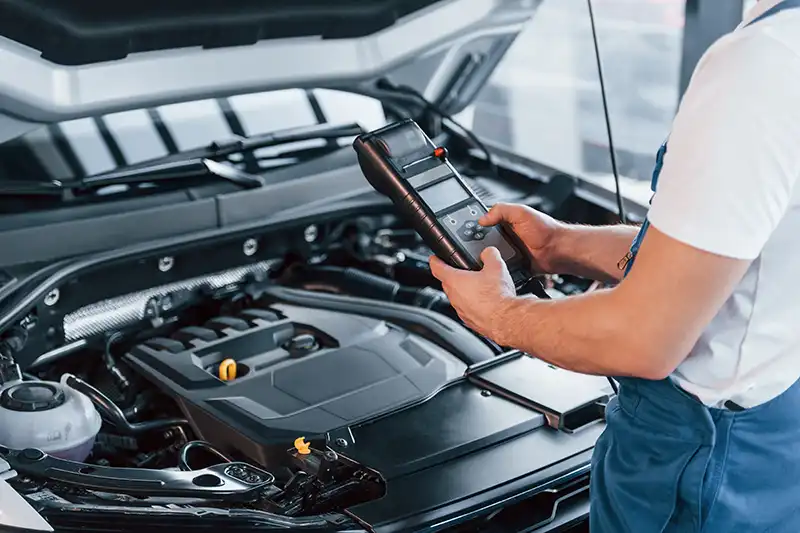
Every diagnostic starts with connecting a scan tool to your vehicle’s OBD-II port, usually located under the dashboard. This step reads the diagnostic trouble codes stored in your car’s computer.
- Expect the basic scan itself to take only five to ten minutes
- Know that a basic scan is just the starting point, not the full diagnostic
- Ask whether the shop includes a road test after the scan
- Allow extra time if your vehicle has multiple modules to check
- Understand that codes point to problem areas, not always the failed part itself
A scan tool can pull codes in minutes, but interpreting those codes correctly takes a trained technician. The real work of a diagnostic begins after the scanner does its job.
How Long a Road Test and Visual Inspection Adds
After pulling codes, a technician takes your vehicle for a road test and performs a visual inspection under the hood. This hands-on step helps confirm what the computer codes are suggesting.
- Plan for the road test to take about ten to fifteen minutes
- Expect the technician to check for loose hoses, damaged wiring, and fluid leaks
- Know that intermittent problems may require a longer test drive
- Allow time for the engine to reach normal operating temperature
- Understand that skipping this step leads to misdiagnosis and wasted money
The road test often reveals what a scanner cannot, such as how the engine behaves under load or at different speeds. This step alone can cut the diagnostic time in half by pointing the technician straight to the problem.
How Long Advanced Testing Takes for Hidden Problems
Some issues don’t show up on a scan or a short drive, which is where advanced testing comes in. Technicians use specialized equipment to measure what the computer can’t report on its own.
- Add thirty minutes to an hour for compression or leak-down testing
- Expect fuel pressure and exhaust analysis to take additional time
- Know that electrical testing with a multimeter or oscilloscope is methodical work
- Allow extra time for pinpoint tests on sensors and actuators
- Understand that chasing an intermittent fault can extend the process
Advanced testing is where experience matters most. A skilled technician can often narrow down a problem in minutes that might take an amateur hours of guesswork.
What Affects Your Total Diagnostic Time
No two diagnostics take exactly the same amount of time because no two problems are identical. Several factors can stretch or shrink your wait.
- Simple sensor failures may be confirmed in thirty to forty-five minutes total
- Complex issues involving wiring or multiple systems can take two to three hours
- Older vehicles with corroded connectors often take longer to test
- Well-documented symptoms from you can speed things up considerably
- Shop workload and technician availability affect your turnaround
Being able to describe when the problem happens, what it sounds like, and how the car feels gives your technician a major head start. Clear communication is one of the best ways to cut your diagnostic time.
How to Make Your Diagnostic Appointment Faster and Smoother
A little preparation before you drop off your car can save you both time and money. These simple steps help the technician get straight to work.
- Write down exactly when the check engine light came on
- Note any sounds, smells, or changes in how the car drives
- Don’t clear the codes yourself before the appointment
- Bring any recent repair records that might be relevant
- Ask for a written estimate of diagnostic time and cost upfront
Arriving prepared turns a vague mystery into a targeted investigation. The more clues you provide, the faster the technician can find the real culprit.
Get Answers Today, Not Guesswork Tomorrow
A full auto engine diagnostic typically takes between one and three hours from start to finish, depending on the complexity of the problem. That small investment of time can prevent hundreds or even thousands of dollars in unnecessary repairs down the road.
Modern vehicles are too complex for guesswork, and throwing parts at a problem is the most expensive approach of all. A proper diagnostic gives you a clear answer and a clear path forward.
If your check engine light is on or your car just isn’t running right, schedule a diagnostic today. Knowing exactly what’s wrong is always faster, cheaper, and safer than hoping the problem goes away on its own.
