
An oil change is the most common maintenance service your car will ever receive, yet most drivers have no idea what actually happens inside the engine when it’s done. Understanding the process helps you appreciate why skipping this simple service is one of the costliest mistakes you can make.
Fresh oil is your engine’s lifeblood, and every mile you drive slowly breaks it down. Here’s a look at what happens inside your engine during an oil change and why it matters so much for your vehicle’s health.
Why Old Oil Stops Protecting Your Engine
Engine oil does far more than just lubricate, it cleans, cools, and seals critical components as it circulates. Over time, heat and friction break down the oil’s additives, leaving it unable to do its job.
- Old oil turns dark and thick because it’s full of dirt, metal particles, and combustion byproducts
- Worn-out oil can’t maintain a protective film between moving metal parts
- Sludge begins to form and clog narrow oil passages in the engine
- Fuel and moisture contamination reduce the oil’s ability to lubricate
- The oil filter becomes saturated and stops trapping new contaminants
Once oil loses its protective qualities, metal-on-metal contact begins inside your engine. That wear happens silently and permanently, which is why fresh oil on a schedule is so much cheaper than an engine rebuild.
How Dirty Oil Is Removed From the Engine
The first real step of an oil change happens underneath your vehicle, where the old oil is drained out completely. This is more involved than just opening a plug and letting it pour.
- The technician removes the drain plug and lets gravity pull the old oil into a catch pan
- The oil filter is unscrewed, releasing the trapped contaminants along with residual oil
- The drain plug is inspected for metal shavings, which can signal internal engine wear
- A new drain plug gasket or washer is installed to prevent leaks
- The drain plug is torqued to the manufacturer’s exact specification
Draining the oil while the engine is slightly warm helps it flow out faster and carries more suspended debris with it. Skipping this step or rushing it leaves old, dirty oil behind to contaminate the fresh oil immediately.
How Fresh Oil Restores Protection the Moment It Flows
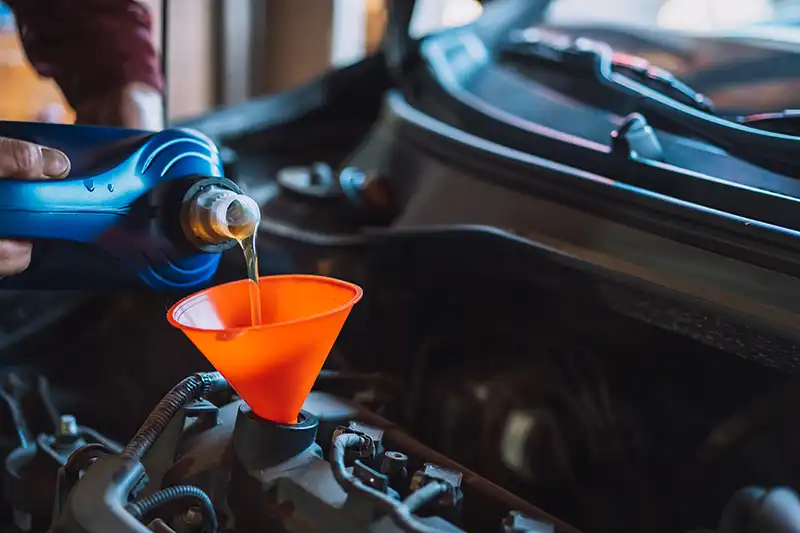
Once the old oil is out and a new filter is installed, fresh oil is poured into the engine and begins circulating within seconds of startup. This is where the real transformation happens inside your engine.
- New oil flows through the oil pump and into every passage, bearing, and moving component
- It forms a thin protective film that keeps metal parts from touching each other
- Detergents in the fresh oil immediately begin dissolving existing sludge deposits
- Additives neutralize acids created during combustion
- The new oil filter starts trapping contaminants from the very first mile
The difference is immediate, your engine runs quieter, smoother, and cooler the moment fresh oil starts circulating. Those first few miles after an oil change are when your engine is at its cleanest and best-protected.
Why the Oil Filter Matters More Than You Think
Many drivers focus on the oil itself and treat the filter as an afterthought, but the two work as a team. The filter is what keeps the oil clean enough to keep doing its job between changes.
- The new filter traps particles as small as a few microns in size
- A cheap or clogged filter forces dirty oil to bypass it entirely through a relief valve
- Bypassed oil circulates without any filtration, spreading grit through your engine
- Quality filters hold more contaminants and last the full interval between changes
- The filter is always replaced during a proper oil change, never reused
Think of the oil as the cleaner and the filter as the trash can, one can’t work effectively without the other. Replacing both together gives your engine the complete fresh start it needs.
How to Get the Most From Every Oil Change
A few smart habits around your oil changes can dramatically extend your engine’s lifespan. These small steps make a big difference over the life of your vehicle.
- Follow your owner’s manual interval, not an outdated rule of thumb
- Check your oil level monthly and top off between changes if needed
- Choose the correct oil viscosity and specification for your engine
- Reset the oil life monitor after every change so tracking stays accurate
- Keep a simple log of dates and mileage for each oil change
Your engine’s oil is working hardest in stop-and-go traffic, extreme temperatures, and short trips. Adjusting your change interval for your actual driving conditions keeps protection where it needs to be.
Fresh Oil Today Means a Strong Engine Tomorrow
An oil change may look simple from the outside, but inside your engine it’s a complete system reset that removes wear-causing debris and restores full protection. Every component that moves, spins, or slides depends on that clean film of oil to survive.
Engines that receive regular oil changes routinely last well past 200,000 miles, while neglected engines can fail far sooner. The service takes less than an hour and costs a fraction of any engine repair it prevents.
If you’re due or overdue for an oil change, schedule one today. Your engine works hard for you every mile, and fresh oil is the simplest way to make sure it never stops.
