
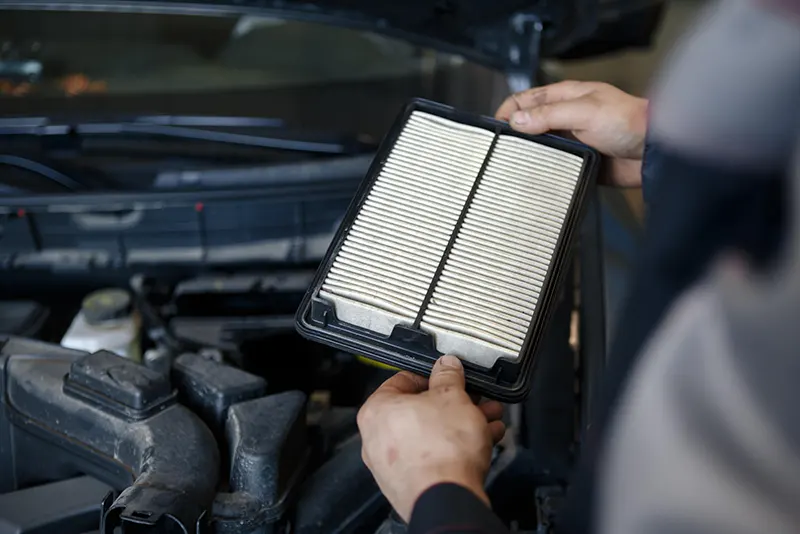
Your vehicle’s engine requires a massive, continuous supply of clean oxygen to efficiently burn fuel and generate power. The engine air filter acts as the primary shield, trapping harmful dust, dirt, and road debris before they can enter the sensitive internal combustion chambers.
Neglecting this simple component for years creates a severe choking effect that quietly cripples your vehicle’s mechanical health from the inside out. Understanding the long-term damage caused by a blocked intake allows you to protect your powertrain and avoid devastating repair bills down the road.
A Dramatic Drop In Acceleration And Horsepower
When an air filter is left unchanged for years, dirt tightly packs into the fibrous material and severely restricts breathing capacity. This suffocating restriction prevents the engine from pulling in enough oxygen to create a potent combustion spark.
- Pay attention if your vehicle feels incredibly heavy and hesitant when you attempt to merge onto a fast-moving highway.
- Notice if the engine revs loudly but struggles to actually gain speed when you push the gas pedal down.
- Monitor whether your car loses significant power when climbing steep hills or carrying heavy cargo.
Without a steady stream of fresh air, your engine simply cannot produce the horsepower it was designed to deliver. Swapping out a suffocated filter instantly restores your vehicle’s throttle responsiveness and brings that missing pep back to your daily drive.
Increased Engine Wear From Abrasive Contaminants
Over time, a heavily neglected filter can actually degrade, tear, or pull away from its housing seals due to constant suction pressure. When the filtration barrier fails, microscopic bits of silica, sand, and hard road grit flow directly into the engine cylinders.
- Check the physical condition of the filter material to see if the paper pleats are cracked, torn, or collapsing inward.
- Look for signs of fine dust coating the inside of the plastic intake tube that leads straight to the engine.
- Listen for a rough, unrefined idling sound that suggests internal friction is taking a toll on the moving parts.
Once abrasive grit gets inside the combustion chamber, it acts like sandpaper against the polished cylinder walls and piston rings. This premature internal scratching ruins the tight seals required to maintain proper engine compression over time.
Severely Reduced Fuel Economy And Spark Plug Fouling
To compensate for a severe lack of airflow, modern automotive computers automatically alter the fuel delivery system. The vehicle begins injecting an excessive amount of gasoline into the cylinders to keep the engine running, a condition known as running rich.
- Track your gas mileage closely to see if your distance per tank has plummeted over the last several months.
- Watch for a strong, unburned gasoline smell lingering around your tailpipe immediately after you park the vehicle.
- Look out for black soot building up on your spark plug tips, which can cause the engine to misfire or idle roughly.
Burning a rich fuel mixture wastes massive amounts of expensive gasoline and rapidly destroys your spark plugs. Installing a clean filter allows the computer to restore a perfectly balanced air-and-fuel ratio, saving you money at the pump.
Illumination Of The Check Engine Light
Your vehicle is equipped with sensitive sensors, such as the mass airflow sensor, that constantly measure the volume of oxygen entering the system. When a clogged filter chokes out the intake, these sensors detect the abnormal airflow patterns and alert the computer.
- Look at your dashboard to see if the yellow check engine light or a specific service reminder has turned on.
- Connect an onboard diagnostic scanner to check for trouble codes related to running rich or mass airflow sensor errors.
- Take immediate action if the dashboard warning light begins flashing, which indicates a severe engine misfire.
Ignoring a dashboard warning light can mask other hidden mechanical issues that may be developing simultaneously. A quick inspection of the intake path is often the easiest and least expensive way to clear a persistent engine code.
Damage To The Costly Catalytic Converter
When an engine is starved of air, the excess unburned gasoline that cannot be ignited in the cylinders gets pushed out through the exhaust system. This raw fuel travels directly into the catalytic converter, where it ignites against the intensely hot internal elements.
- Watch for dark, heavy smoke or a bluish haze floating out of your tailpipe during heavy acceleration.
- Listen for a loud rattling sound underneath your car, which indicates the internal ceramic bricks of the converter have melted and broken apart.
- Notice if your exhaust system feels heavily restricted, causing the engine to bog down and overheat quickly.
A melted or ruined catalytic converter is incredibly expensive to replace and will instantly cause a vehicle to fail state emissions tests. Preventing this catastrophic exhaust breakdown is as simple as keeping a fresh, clean intake filter in place.
Invest In Premium Protection For Your Powertrain
Replacing a heavily neglected air filter is one of the easiest and most cost-effective ways to extend the lifespan of your vehicle’s engine. Giving your automobile a clean breath of air prevents internal scarring, preserves your fuel budget, and keeps your exhaust system working flawlessly.
Do not let a minor, inexpensive maintenance item turn into a major mechanical nightmare that leaves your vehicle in the shop for weeks. Take control of your car’s longevity today by scheduling a professional filtration service to ensure your engine breathes easy for miles to come.
